How the Economy Impacts Mortgage Rates

How the Economy Impacts Mortgage Rates
As someone who’s thinking about buying or selling a home, you’re probably paying close attention to mortgage rates – and wondering what's ahead.
One thing that can affect mortgage rates is the Federal Funds Rate, which influences how much it costs banks to borrow money from each other. While the Federal Reserve (the Fed) doesn’t directly control mortgage rates, they do control the Federal Funds Rate.
The relationship between the two is why people have been watching closely to see when the Fed might lower the Federal Funds Rate. Whenever they do, that’ll put downward pressure on mortgage rates. The Fed meets next week, and three of the most important metrics they’ll look at as they make their decision are:
- The Rate of Inflation
- How Many Jobs the Economy Is Adding
- The Unemployment Rate
Here’s the latest data on all three.
1. The Rate of Inflation
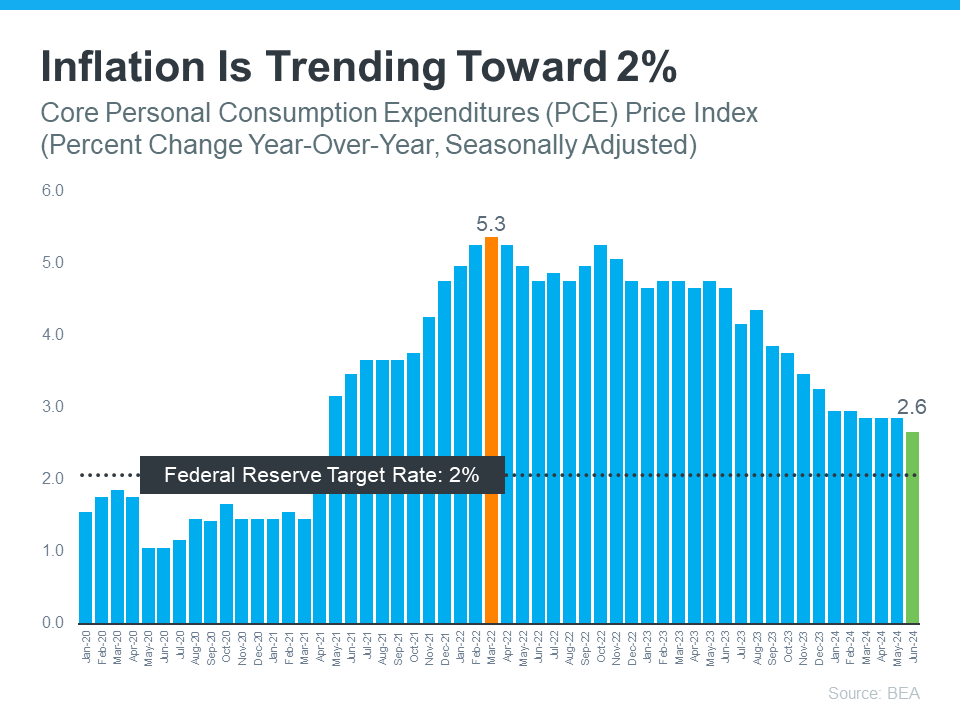
You’ve probably heard a lot about inflation over the past year or two – and you’ve likely felt it whenever you’ve gone to buy just about anything. That’s because high inflation means prices have been going up quickly.
The Fed has stated its goal is to get the rate of inflation back down to 2%. Right now, it’s still higher than that, but moving in the right direction (see graph below):
 2. How Many Jobs the Economy Is Adding
The Fed is also watching how many new jobs are created each month. They want to see job growth slow down consistently before taking any action on the Federal Funds Rate. If fewer jobs are created, it means the economy is still strong but cooling a bit – which is their goal. That appears to be exactly what’s happening now. Inman says:
“. . . the Bureau of Labor Statistics reported that employers added fewer jobs in April and May than previously thought and that hiring by private companies was sluggish in June.”
So, while employers are still adding jobs, they’re not adding as many as before. That’s an indicator the economy is slowing down after being overheated for quite some time. This is an encouraging trend for the Fed to see.
3. The Unemployment Rate
The unemployment rate is the percentage of people who want to work but can’t find jobs. So, a low rate means a lot of Americans are employed. That’s a good thing for many people.
But it can also lead to higher inflation because more people working means more spending – which drives up prices. Right now, the unemployment rate is low, but it’s been rising slowly over the past few months (see graph below):
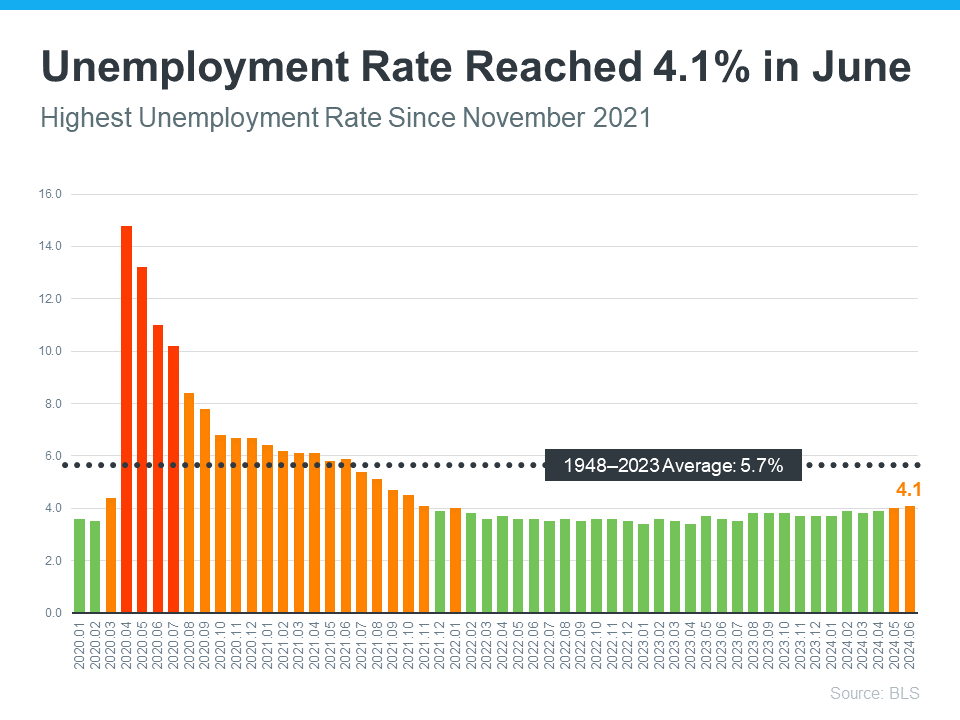 It may seem harsh, but a consistently rising unemployment rate is something the Fed needs to see before deciding to cut the Federal Funds Rate. That’s because a higher unemployment rate would mean reduced spending, and that would help get inflation back under control.
What Does This Mean Moving Forward?
While mortgage rates are going to continue to be volatile in the days and months ahead, these are signs the economy is headed in the direction the Fed wants to see. But even with that, it’s unlikely they'll cut the Federal Funds Rate when they meet next week. Jerome Powell, Chair of the Federal Reserve, recently said:
“We want to be more confident that inflation is moving sustainably down toward 2% before we start the process of reducing or loosening policy.”
Basically, we’re seeing the first signs now, but they need more data and more time to feel confident that this is a consistent trend. Assuming that direction continues, according to the CME FedWatch Tool, experts say there’s a projected 96.1% chance the Fed will lower the Federal Funds Rate at their September meeting.
Remember, the Fed doesn’t directly set mortgage rates. It’s just that whenever they decide to cut the Federal Funds Rate, mortgage rates should respond.
Of course, the timing of when the Fed takes action could change because of new economic reports, world events, and other factors. That’s why it's usually not a good idea to try to time the market.
Bottom Line
Recent economic data may signal that hope is on the horizon for mortgage rates. Let’s connect so you have an expert to keep you up to date on the latest trends and what they mean for you.
Categories
- All Blogs 475
- Arlington, TX 9
- best deal 1
- broad street 1
- brokerage 1
- build your home 44
- builders 21
- building a business 3
- burleson 8
- buyers market 137
- buying a home 277
- closing costs 48
- Community 18
- community spotlight 2
- condominiums 13
- credit 9
- Dallas 3
- dallas property tax 2
- dallas real estate 79
- DFW Lifestyle 22
- dfw property tax 2
- down payment 47
- down payment assistance 6
- downsizing 41
- finances 38
- first time home buyer 149
- for sale by owner 19
- Fort Worth 8
- Fort Worth real estate 79
- home affordability 135
- home equity 42
- home insurance 6
- home loan 90
- home ownership 162
- home price 121
- home tips 71
- home value 117
- housing market 215
- interest rates 71
- investment 33
- leasing 2
- listing agent 13
- Living in DFW 18
- Living In Texas 13
- local events 8
- lower interest rate 6
- luxury homes 4
- Mansfield real estate 76
- Mansfield, TX 12
- Midcities 9
- Midlothian, TX 11
- money savings 1
- mortgage 78
- mortgage rates 65
- moving to Texas 29
- neighborhood news 8
- new construction 37
- new developments 1
- new home 68
- owning a home 66
- preapproval 30
- pricing your home 79
- property management 7
- property taxes 2
- real estate 228
- real estate agents 6
- real estate taxes 6
- real estate tips 201
- realtors 5
- relocating 15
- relocating to Texas 31
- rental 3
- renting 8
- restaurants 1
- savings 14
- school districts 2
- second home 30
- sellers 135
- selling and buying a house at the same time 17
- selling your home 150
- senior living 18
- state income tax 1
- texas property tax 2
- texas taxes 1
- things to do 2
- vacation home 8
- Veterans 3
- wealth 14
Recent Posts









GET MORE INFORMATION